Built by scientists
1,200+
Biomarkers
10,000+
Scientific sources
10,000,000+
Biological relations
Designed for preventive decision-making
BRIBRO was developed by scientists with degrees from the world's best universities, aiming to make complex biological data translatable into professional and preventive decision-making.
Stanford University, Harvard University, University of Oxford, University College London (UCL), KU Leuven, ETH Zurich, University of Cambridge, Karolinska Institutet.

Biological insights at scale
Complex biological data is structured into interpretable and reproducible insights that support professionals in decision-making around prevention, performance, and long-term health.
✓ 10M+ biological connections
✓ 10,000+ scientific sources
(including peer-reviewed literature, international medical guidelines, and public biomedical databases such as PubMed)





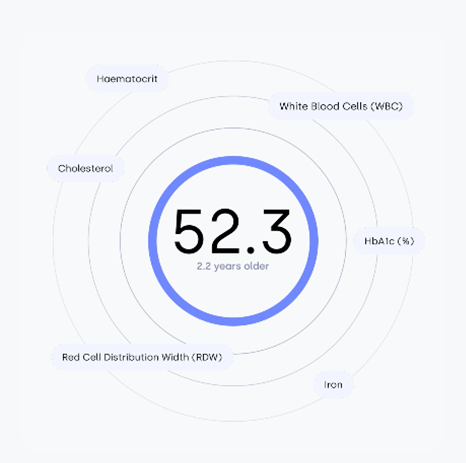
Age Clocks & biological aging
Although time passes equally for everyone, not everyone ages at the same rate.
Bribro integrates epigenetic data, blood biomarkers, and microbiome insights into one model. This makes differences and changes influenced by lifestyle, training, stress, and recovery objectively measurable.
Age clocks are not a diagnosis, but scientifically validated tools for monitoring over time.
What we measure
BRIBRO™
DNA Test
Maps genetic variants associated with individual differences in nutrient metabolism, inflammatory response, recovery capacity, and training adaptation.
Analysis of >750,000 clinically and performance-relevant SNPs
Insight into genetic predispositions for nutrition, training, recovery, and health
One-time test with a stable genetic basis
Foundation for personalized prevention and optimization
BRIBRO™
Epigenetic Test
Provides an objective and scientifically validated estimate of biological age and aging rate.
Measurement of dynamic DNA methylation markers that respond to lifestyle and environment
Analysis of >935,000 epigenetic markers (DNA methylation) in biologically relevant gene regions
Suitable for monitoring and evaluating interventions over time
- Based on the Illumina Methylation EPIC v2 array, the current academic and clinical standard
BRIBRO™
Microbiome Test
Maps the composition and functional capacity of the gut microbiome based on a stool sample.
Analysis via whole-genome shotgun (WGS) metagenomics
Detection of hundreds of microbial species (>300) with relative abundance and diversity
Analysis of millions of microbial genes that determine functional capacity
Mapping of metabolic pathways involved in energy, fat, and inflammation metabolism
Blood biomarkers
Provides insight into the current physiological and metabolic status based on comprehensive blood analysis.
Analysis of100+ hematological, metabolic, inflammatory, and hormonal biomarkers
Evaluation oforgan function(liver, kidneys, cardiovascular system)
Insight intometabolic health(glucose, lipid, and energy metabolism)
Measurement ofsystemic inflammation and immune activity
Interpretation based onage- and sex-dependent reference values
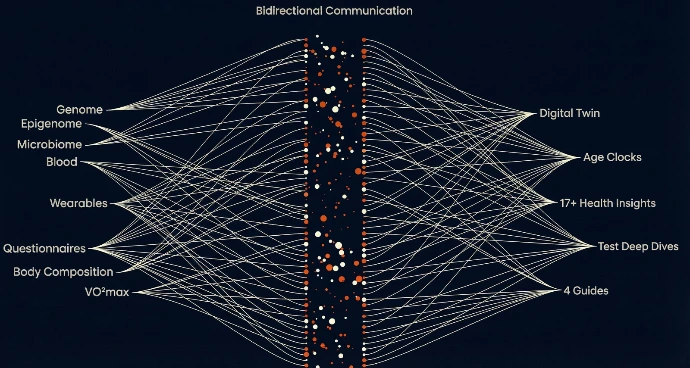
Explainable AI (XAI)
Artificial intelligence is used as explainable AI (XAI) to structure biological relationships and recognize patterns based on existing scientific literature and medical databases.
The analytical frameworks used are rule-based and evidence-driven, ensuring that reasoning is traceable and verifiable. The AI layer does not make decisions, diagnose, or replace professional expertise.
Scientific reliability in practice
- Insights are transparent and traceable
- Repeated measurements enable longitudinal follow-up
- Interpretations align with common biomedical reference frameworks
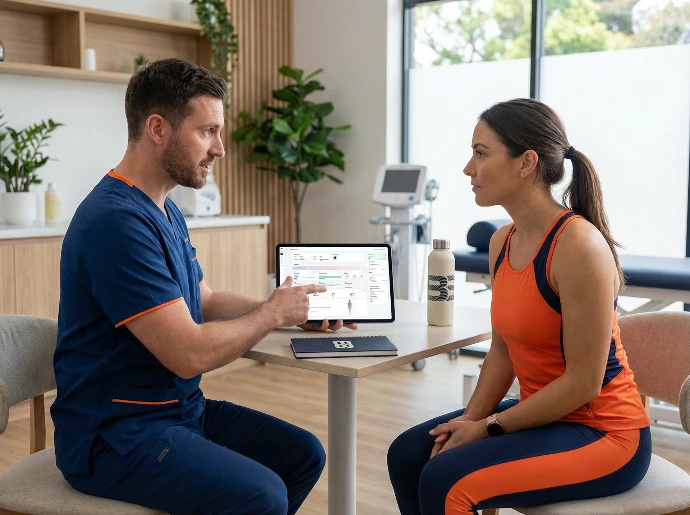
The technology supports professional decision-making without replacing it.
Scientific continuity
so that analyses remain relevant, consistent, and scientifically substantiated.
Responsibility & ethics
Data processing is carried out according to privacy-by-design principles and GDPR-compliant data governance, in line with ethical and scientific standards.
Want to know more about the science?
◷ Demo 60 min
Discover the complete scientific basis through a demo.